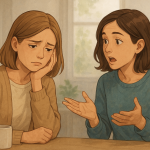

As we step into a new year, many of us find ourselves reflecting on the journeys we’ve taken, the places we have lived, the communities we have been part of, and the identities we continue to carry within us.
Over the past couple of years, and especially in light of recent events, many people I have met in my clinic, in support groups, and in conversations have shared a similar inner tension:
How do we stay true to who we are, to our story, our history, our values, while also finding a sense of belonging in the country and community where we live?
The events in Bondi were deeply painful for many in the Jewish community. Beyond the shock and grief, they unsettled something more fragile, our sense of safety, connection, and trust in the environment around us. For many people, they reopened questions that had been quietly present for a long time.
Belonging as a Human Need
We are social beings. Belonging, connection, and meaning are not luxuries – they are core psychological needs.
We need to feel seen.
We need to feel that we matter.
We need to know that we have a place.
When this sense of belonging is shaken, it is human and completely understandable to experience feelings such as anxiety, sadness, fear, anger, confusion, or emotional overwhelm.
In the support groups or with clients I’ve met, these emotions surfaced again and again alongside something else:
A deep desire to talk, to be heard, to grieve, and to come together.
Some people felt the need to speak out and be visible.
Others chose silence, seeking safety and protection.
Both responses came from the same inner place care, vulnerability, and the longing to belong.
When uncertainty or exclusion appears within communities we once experienced as safe and inclusive, the pain can feel like a form of grief, grief for trust that has been shaken, for safety that no longer feels certain, and for the gap between the values we hoped for and the reality we are living.
Hope, Connection, and Reaching Out
And yet, even in these challenging moments, I witnessed something deeply hopeful.
People reached for one another.
They sought connection, meaning, and togetherness.
Some chose to build bridges beyond the Jewish community, sharing stories, explaining traditions such as Hanukkah, not from defensiveness, but from a sincere wish to deepen understanding and human connection.
What We Ask Ourselves When We Live Between Worlds
This brings us to an important reflection for the new year:
Identity is not only about where we come from, it is also about why we chose to be where we are now.
Just as we reflect on what we carry from our country of origin, we can also ask:
- What drew me to this place?
- What do I appreciate here?
- What parts of this culture have become part of me?
- What tensions or questions do I still hold?
- And what emotional price or gift comes with this choice?
Studies on migration and identity reminds us that living with a layered or multicultural identity requires emotional flexibility, self-compassion, and ongoing reflection. There is no single “right” answer.
Staying, leaving, speaking up, remaining quiet – each path carries meaning, courage, loss, and growth.
A Personal Note
In my own life, I made the decision to leave a country I lived in for 16 years and return to Israel. It was a deeply personal and complex choice and it is not the path that everyone needs to take.
What feels important to say, especially as we enter a new year, is this:
There is more than one way to belong.
There is more than one way to live between worlds.
Those who stay deserve safety, dignity, and a voice.
Those who return home deserve compassion and understanding.
And all of us deserve spaces where our stories and our questions can exist.
I encounter these reflections every day in my work and in my own journey.
A New Year Invitation
If you recognise yourself in these words, perhaps this new year is an invitation to pause, to breathe, and to explore these questions gently not alone, but in conversation, in community, and in connection.
Because belonging often begins in the simplest place
where someone truly listens.