The Rollercoaster of Emotions
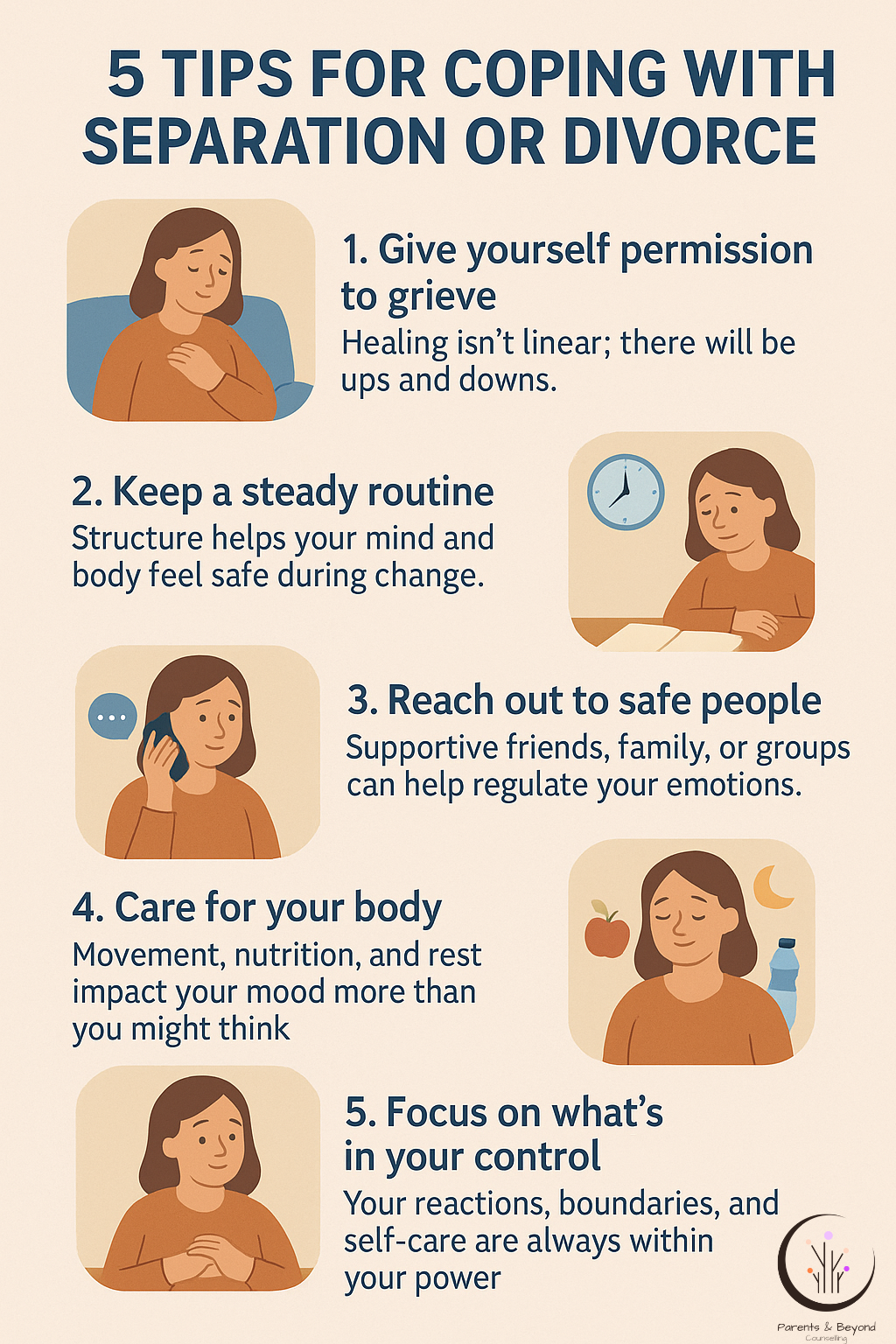
Separation or divorce is not “just paperwork.” It’s the loss of a dream, the ending of a story you once imagined for yourself. It’s natural to move through waves of denial, anger, sadness, and eventually acceptance, but it’s rarely a straight line. Healing looks more like a dance: two steps forward, one step back. And that’s okay. Giving yourself permission to feel it all, without judgment—is where true recovery begins.
Why It Feels So Hard
When a relationship ends, especially one where you invested your love and hopes, your body reacts as if it has lost its safe anchor. The nervous system can’t always tell the difference between a real threat and an emotional one. That’s why you might feel panic, emptiness, or like the ground has been pulled from under you. Understanding this isn’t weakness—it’s proof that your body is wired for connection. Healing is about slowly finding new safe bonds—with friends, with supportive groups, and most importantly, with yourself.
Stress and the Body
We talked about how stress shows up in everyday life: snapping at your kids, wanting to run away, freezing in front of a pile of laundry, or collapsing under the covers with exhaustion. These aren’t signs that you’re failing—they’re your body trying to protect you.
 The Nervous System – and Why It’s Not Your Enemy
When you’re going through separation or divorce, your body can feel like it’s betraying you: racing heart, shallow breath, snapping at small things, or wanting to hide away. The truth is that your body isn’t failing you. It’s doing exactly what it was designed to do: keep you safe.
Our nervous system has a built-in “alarm system” that switches on when it senses danger. Sometimes that danger is real (like a tiger), but sometimes it’s emotional (like a message from your ex). Your brain doesn’t know the difference—it just reacts. That’s why you might fight, flee, freeze, or collapse.
 The good news is this: while you can’t always control what sets off the alarm, you can guide your body back into safety. This is called regulation, and it’s a skill you can practice every day.
Tools we practiced together:
Slow, deep breathing (like square breathing).
Grounding—feeling your feet on the floor, noticing your surroundings.
Movement—gentle stretching, walking, shaking tension out.
Connection—talking with a safe person, sharing a hug, or eye contact.
Routine—simple daily structure that reassures your system you’re safe.
 Key message: Your nervous system isn’t broken. It’s natural to feel on edge after a big loss. With small practices, you can calm the alarm and create moments of safety for yourself and your children.
Boundaries Without Guilt
Boundaries aren’t walls, they’re doorways to peace. Many mothers feel guilty after separation and try to “make up” for it with gifts or overcompensating. But children don’t need endless toys or for us to do everything for them. What they need most is our presence, predictability, and emotional safety. Boundaries make that possible. Saying no to chaos is actually saying yes to your children’s well-being.
Rebuilding Yourself
Divorce often takes more than a partner, it can shake your sense of identity. Maybe you pictured growing old together, raising children in a certain way, or building a shared future. When that dream ends, it can feel like losing part of yourself. But here’s the gift hidden in the pain: you get to rewrite your story. This is the time to rediscover your strengths, explore forgotten interests, and create a vision of happiness that truly belongs to you.
What’s In My Control – and What’s Not
One of the most freeing conversations we had was about control.
Not in my control: my ex’s behavior, other people’s opinions, the past, or how quickly others “move on.” These things may affect me, but I can’t change them.
In my control: my words and reactions, how I use my energy, the boundaries I set, the way I care for myself, and what I model for my children about resilience.
The less energy we spend trying to control the uncontrollable, the more space we create for what truly matters—our peace, growth, and our children’s well-being.
You Don’t Have to Do It Alone
Perhaps the most important theme we explored: healing doesn’t happen in isolation. Community matters. That’s why I’m opening a small, closed support group for divorced and separating women, starting September 2025. Together we’ll share, learn, and support each other in a safe, confidential space.
So:
You don’t need to do it all at once. You don’t need to be perfect. Healing is about taking one small step at a time, and every step counts.